

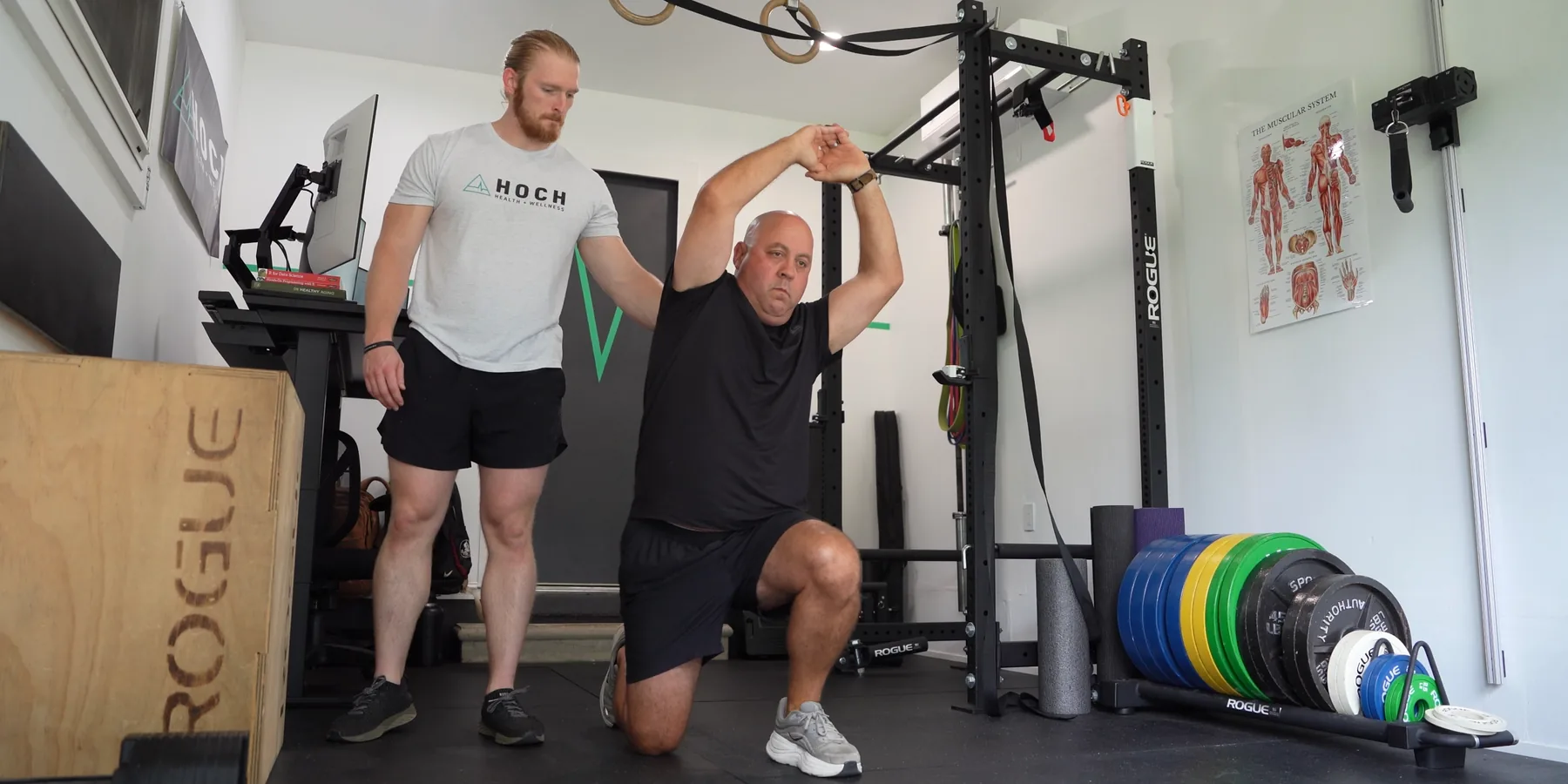
Sit down on the floor, then stand back up, using as little support as you can. That’s the entire sitting-rising test. It looks like something a child does without thinking, and that’s the point: it bundles together the strength, balance, flexibility, and coordination that tend to fade first, and fade together. In a study of more than 2,000 adults aged 51 to 80, how well people did on this test predicted their odds of dying over the next six years, strongly enough that the researchers called it a simple marker worth paying attention to (Brito et al. 2014).
It’s a striking finding, but keep it in proportion: the test reflects an association, not a cause. A low score doesn’t seal a fate, and a perfect ten isn’t a warranty. What it does give you is an early, honest read on capacities that are very trainable, if you catch them slipping. If you’re wondering how getting off the floor could track survival when almost no death certificate mentions muscle, nobody dies of weak muscles walks through the chain of events those certificates leave out.
Please read before you try this
This test involves getting down to and up from the floor, which carries a real risk of falling. Only attempt it if you can already do so comfortably. Test on a clear, non-slip surface, near a sturdy chair or wall you can grab, and ideally with another person present to spot you. Skip it entirely if you have balance problems, dizziness, osteoporosis, a joint replacement, or any injury of the hip, knee, ankle, or back, and check with your doctor or physical therapist first if you’re unsure.
This is a general fitness self-check, not a medical test or a diagnosis. Needing support to get off the floor is common and nothing to be ashamed of. It’s information, not a sentence.
Consult your physician before beginning any new exercise or fitness test. You perform this test voluntarily and entirely at your own risk. Hoch Health and Wellness LLC is not responsible for any injury, loss, or damage arising from the use of this information, and reading this article creates no coaching, medical, or other professional relationship.
How to score it
You start with a perfect score of 10 (five points for sitting down, five for standing up), and you subtract for the help you need along the way. From standing, lower yourself to a seated position on the floor, then rise back to standing, moving at your own careful pace.
- Subtract 1 point each time you use a hand, forearm, knee, or the side of your leg for support, on the way down and on the way up.
- Subtract 0.5 points each time you lose your balance or wobble noticeably, or put a hand on a knee to steady yourself.
- Add your two halves. Sitting (out of 5) plus rising (out of 5) gives your final score, from 0 to 10.
Don’t force a “better” score by skipping support you actually need. The honest number is the useful one, and safety always wins over a point.
Reading your score
In Brito’s study, scores fell into four bands. Compared with the highest group, lower bands carried higher mortality risk over the follow-up, even after accounting for age, sex, and body-mass index, and every single point was worth roughly a 21% difference in survival. Find your band below.
The number is a starting line, not a scoreboard. Wherever you land, the response is the same and encouraging: the strength, balance, and mobility this test measures are among the most trainable things in the body at any age. If your score surprised you, treat it as an early, actionable signal, not bad news. And if you want a companion read on your heart and lungs, the one-mile walk test covers the other half of the longevity picture.