

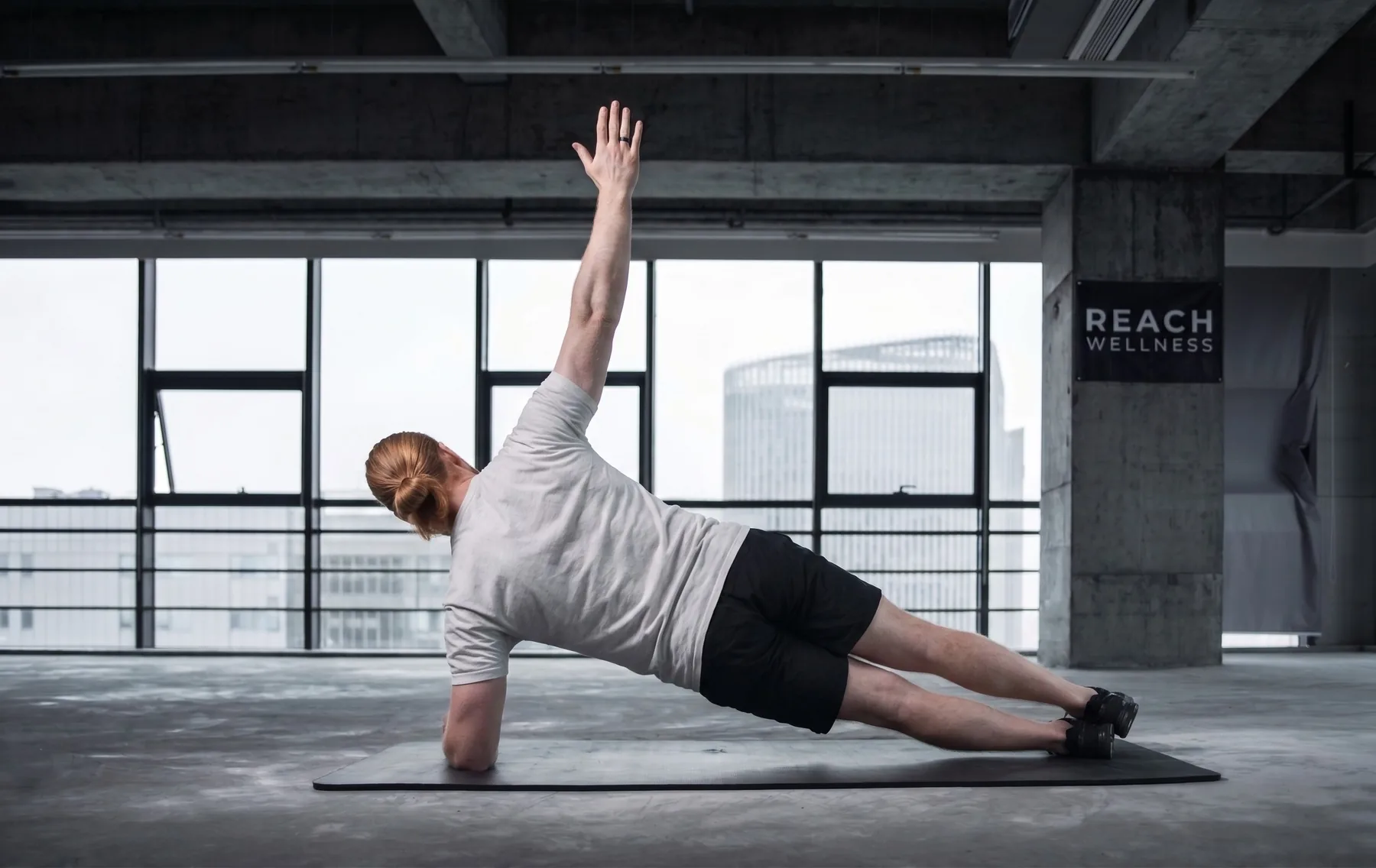
Most people think of “core strength” as how many sit-ups they can grind out. But the core’s real job isn’t to crunch. It’s to resist: to hold your spine steady while your arms and legs do the work. The side plank tests that job directly. Lie on your side, prop up on one forearm, lift your hips into a straight line, and hold. The clock does the rest, and what it reads is a surprisingly honest measure of whether the muscles guarding your lower back are keeping up.
Before you test
Skip or modify this test if you have a current back, shoulder, or hip injury, or if holding it reproduces pain. It’s a fitness self-check, not a medical assessment. If something hurts, that’s a conversation for a clinician, not a number to chase. Stop the moment you feel sharp or pinching pain rather than muscular fatigue.
Consult your physician before beginning any new exercise or fitness test. You perform this test voluntarily and entirely at your own risk. Hoch Health and Wellness LLC is not responsible for any injury, loss, or damage arising from the use of this information, and reading this article creates no coaching, medical, or other professional relationship.
The star of this test is a deep muscle called the quadratus lumborum, which runs alongside your lumbar spine. Research by Stuart McGill, one of the most-cited spine biomechanists in the field, ties this muscle’s endurance to the stability of the lower back (McGill et al. 1999). When the side of the trunk fatigues early, the spine loses a layer of protection. That’s why a short hold can flag a gap worth closing before it turns into a complaint.
What you’re testing
The intent: build and measure lateral core and shoulder stability through sustained, unbroken isometric control. It isn’t about speed or reps; it’s about how long you can hold a clean position before form breaks. And because the test is one side at a time, it does something a front plank can’t: it shows you whether your left and right keep pace with each other. A lopsided result is often more useful than the raw number.
How to run the test
- Set your position. Lie on one side, forearm on the floor with the elbow directly under the shoulder. Stack your feet, hips, and shoulders in one straight line.
- Lift and lock in. Press through the forearm, squeeze your glutes, and brace your abs to raise your hips until your body is a straight line from ankle to head. No sagging, no piking.
- Start the clock and hold. Time one unbroken hold. The moment your hips drop or your form gives out, stop the clock. That’s your number.
- Test the other side. Rest, switch sides, and repeat. Compare the two: they should be within roughly 5–10% of each other.
No stopwatch handy? Use the one right here. Take your best single unbroken hold (in seconds) as your score.
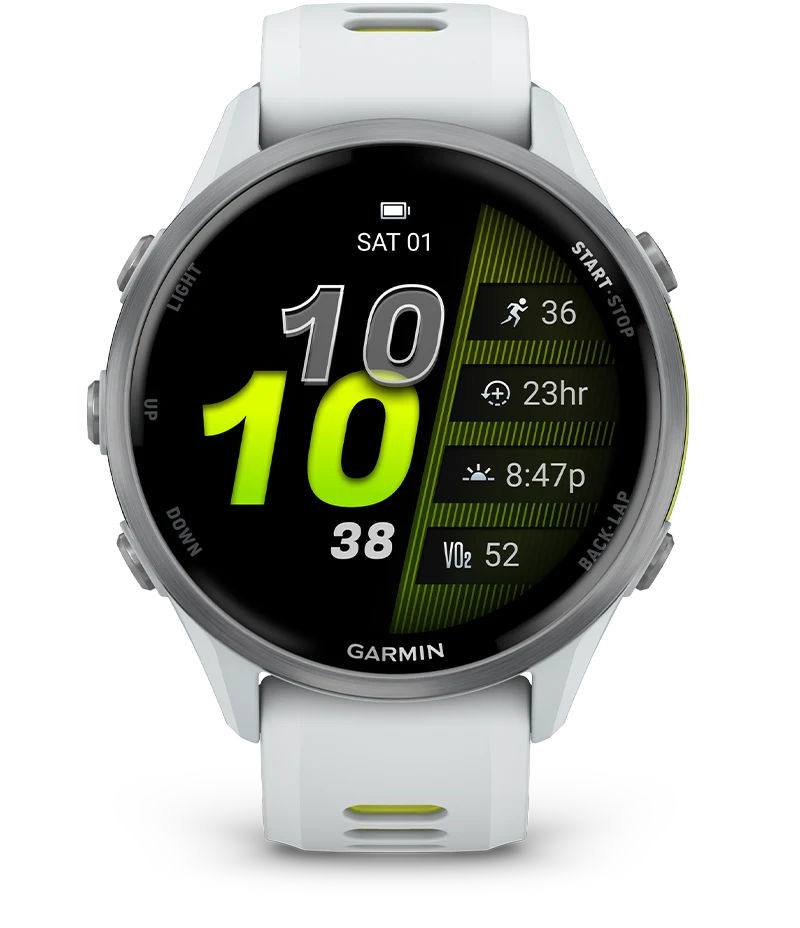
Tap the watch face to start as you lift into the hold, and tap again to stop the instant your form breaks — that logs one side. Rest, switch sides, and repeat. Then hit Use best hold to drop your best time into the benchmark check below.
Side-plank benchmark check
Your hold against the clinical reference target for your sex. Aim to build the number over time, and to keep your two sides even.
Your rating appears with your result above: the calculator compares your best hold to McGill’s healthy-adult reference average, roughly 95 seconds for men and 75 for women (McGill et al. 1999), and shows where you land. Treat the band as a compass, not a verdict: it’s built around a reference mean, not a validated percentile cut-score.
One caveat: this is an endurance reference from a healthy adult sample, not a diagnosis. A shorter hold doesn’t mean your back is failing, and a long one isn’t a guarantee against pain. The most useful signals are the two you can act on: is the number climbing over the months, and are your left and right sides even?